
Drei Tage voller Begegnungen, neuer Perspektiven und inspirierender Gespräche: Vom 30. September bis 2. Oktober 2026 fand an der Universität Osnabrück die erste Geography Connect Convention (GCC) statt. Unter dem Leitthema „Mensch–Umwelt–Beziehungen: Risiken – Transformationen – Zukünfte“ kamen Geographinnen und Geographen aus Wissenschaft, Bildung und Praxis zusammen, um Ideen auszutauschen, neue Verbindungen zu knüpfen und gemeinsam über die Zukunft unseres Faches nachzudenken.
Mit einer eindrucksvollen Keynote von Luisa Neubauer, spannenden Podiumsdiskussionen, vielfältigen wissenschaftlichen Beiträgen, interaktiven Workshops, Exkursionen und kreativen Formaten wie Pitch & Connect bot die GCC weit mehr als eine klassische wissenschaftliche Tagung. Vor allem aber waren es die Offenheit, die Neugier und die vielen persönlichen Begegnungen, die diese drei Tage besonders gemacht haben.
Ein herzliches Dankeschön gilt allen Teilnehmenden, Vortragenden, Sitzungsleitungen und Mitwirkenden, die die GCC mit ihren Ideen, Beiträgen und Diskussionen bereichert haben. Unser besonderer Dank geht an die Universität Osnabrück, den Wissenschaftlichen Beirat, das Organisationsteam sowie alle Partner und Unterstützer, die diese Premiere möglich gemacht haben.
Die erste GCC hat gezeigt, welches Potenzial im Austausch über fachliche und institutionelle Grenzen hinweg steckt. Wir nehmen viele Impulse, neue Kontakte und wertvolle Erfahrungen mit – und freuen uns darauf, die Idee der Geography Connect Convention gemeinsam weiterzuentwickeln.
Danke, dass Ihr dabei wart und diese erste GCC mit Leben gefüllt habt!
gg
Die GCC richtet sich an alle, die Geographie mitgestalten wollen. Sie bietet insbesondere Raum für den wissenschaftlichen Nachwuchs – von der fortgeschrittenen Qualifikationsphase bis zur frühen Postdoc-Phase – sowie für Lehrkräfte, Fachkräfte aus der Praxis, kommunale Akteure, Vertreter aus NGOs und Unternehmen sowie für etablierte Forschende.
Students and those at the beginning of their careers gain low-threshold access to the community, receive constructive feedback on initial projects and thesis topics, and gain guidance on career paths in academia, teaching, and professional practice. Doctoral candidates and early postdocs benefit from scholarly exchange on concepts, methods, and paper drafts, establish contacts with suitable research teams for project proposals, and increase their visibility through presentations or “lessons learned” formats. Established researchers, in turn, can mentor early-career scholars, expand their network, and meet potential new team members.
Teachers as well as experts in higher education didactics use the GCC to exchange ideas on innovative teaching and field trip formats and to discuss how current research can be directly integrated into educational work. Stakeholders from administration, business, and civil society gain direct access to the latest scientific findings, connect with suitable research teams for evaluation, transfer, and real-world laboratory projects, and meet qualified early-career talent.
The GCC is the space where initial contacts turn into joint projects. In creative and collaborative formats, participants receive honest feedback on their contributions, improve their methodological and communication skills in workshops, expand their networks, and gain practical career advice, for example on publication strategies, third-party funding, and geography-related paths outside of academia.
Here you can present your research findings, project, or initiative in more detail. Your presentation lasts 20 minutes, followed by 10 minutes for discussion.
Here you can present your research findings, project, or initiative in more detail. Your presentation lasts 20 minutes, followed by 10 minutes for discussion.
Our world is confronted with complex challenges such as the climate crisis, loss of biodiversity, resource scarcity, increasing economic and social inequalities, and (geopolitical) conflicts. These risks are closely interlinked and can reinforce each other, leading to unpredictable consequences for people and the environment. At the same time, new opportunities are unfolding to promote a sustainable future through transformative measures and practices.
The Geography Connect Convention (GCC) in Osnabrück in 2026 aims to provide an interactive forum for transdisciplinary exchange on current research findings, innovative methods and forward-looking practical and conceptual approaches. We encourage contributions that deepen our understanding of systemic risks in the context of human-environment relationships and at the same time point to possible solutions to the challenges outlined.
In the spirit of the networking character of the GCC and the complex human-environment systems, we particularly welcome contributions that go beyond the core of a single discipline. In particular, we seek contributions that address the interfaces between sub-disciplines, promote holistic or interdisciplinary dialogue and present integrative approaches for geographical science, didactics and/or professional practice – also in the sense of education for sustainable development.
Human-environment relationships in the context of risks, transformation and future will be the guiding topic of GCC 2026. We welcome sessions and contributions that examine these interactions from different perspectives and facets that address the following or related topics, among others:
Innerhalb der Themenfelder freuen wir uns auch über Beiträge, die methodische Ansätze sowie Methodentriangulation in den Mittelpunkt stellen, z. B. über den Einsatz von GIS und Fernerkundung, Big Data und Machine Learning, Modellierungs- und Simulationsverfahren, Citizen Science und partizipative Forschung.
The Geography Connect Convention (GCC) is a new forum for geographers from academia, practice, and teaching – transdisciplinary, connecting, and future-oriented. At its core is the idea of connection: between people, topics, perspectives, and pathways into and with geography.
We warmly invite students, doctoral candidates, teachers, early-career professionals, researchers, and practitioners to submit their own contributions, ideas, and projects. The GCC does not see itself as a traditional academic conference, but as a meeting point for exchange, experimentation, and collaboration.
We welcome contributions addressing topics, projects, methodological or didactic approaches from all fields of geography – from human geography and physical geography to geoinformatics, geography education, and applied geography.
Submissions that build bridges between the following areas are particularly encouraged:
The 2026 convention in Osnabrück focuses on human–environment relations: risks – transformations – futures. We are delighted to receive contributions related to this theme, but welcome other topics as well.
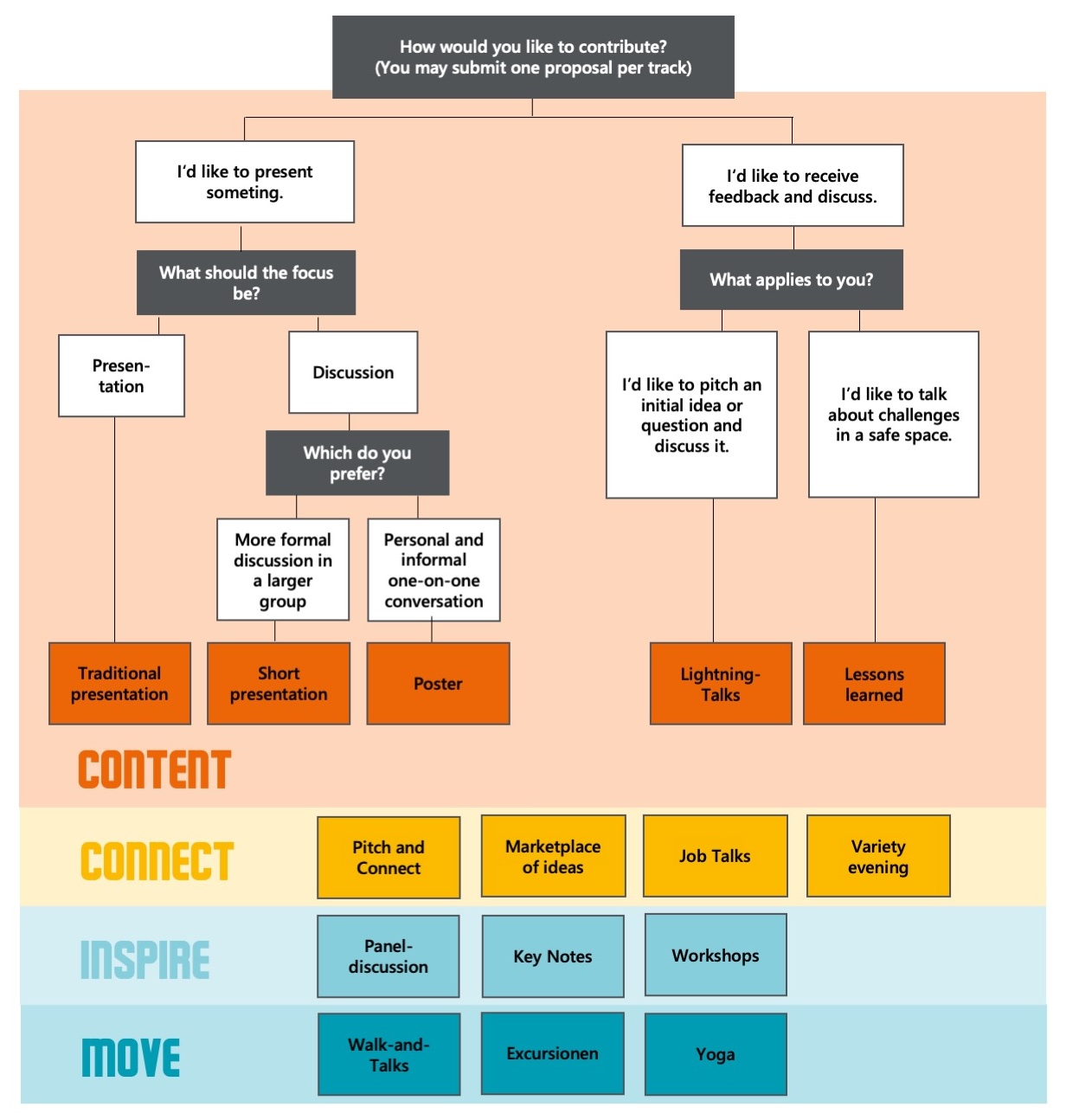
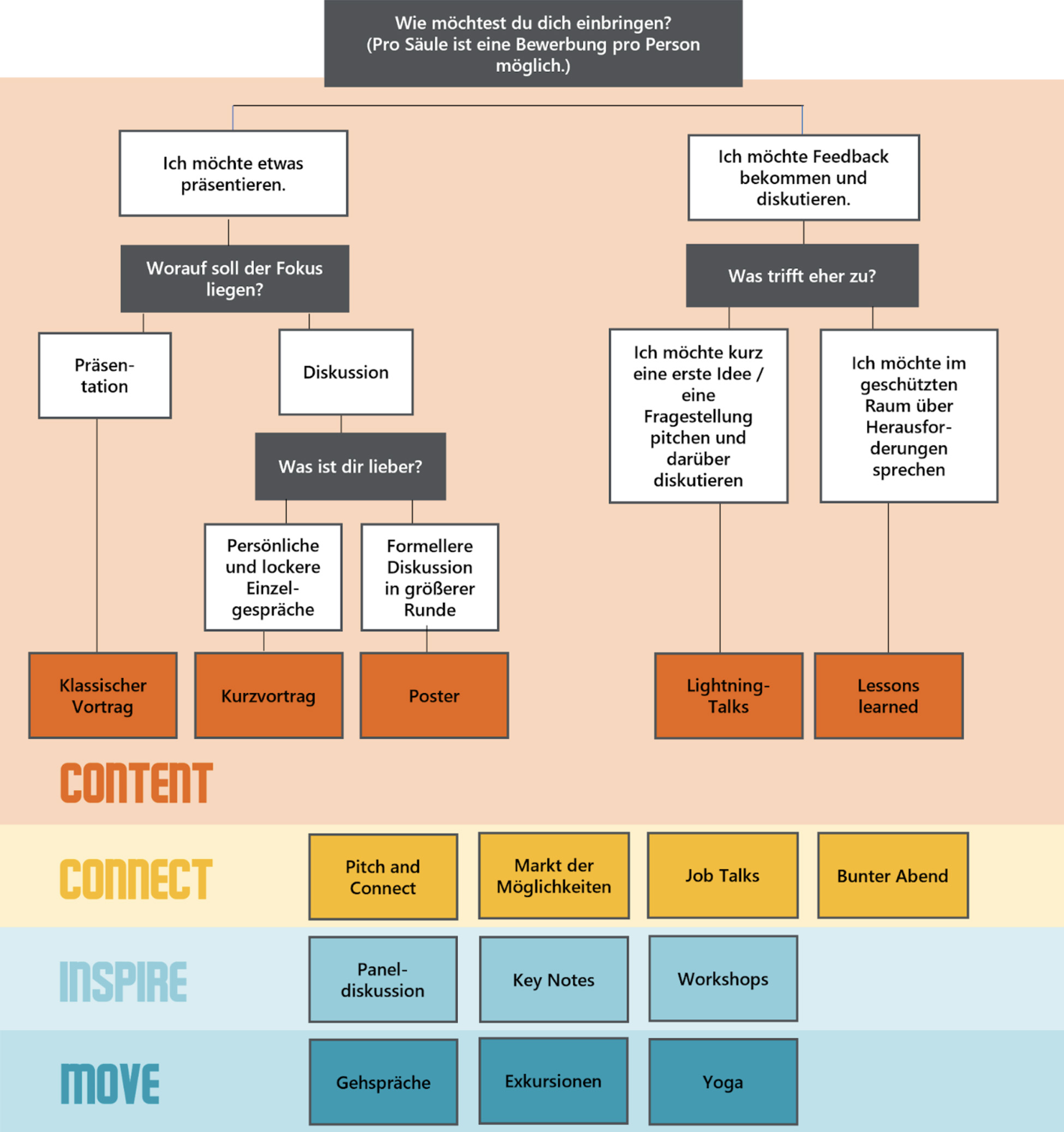
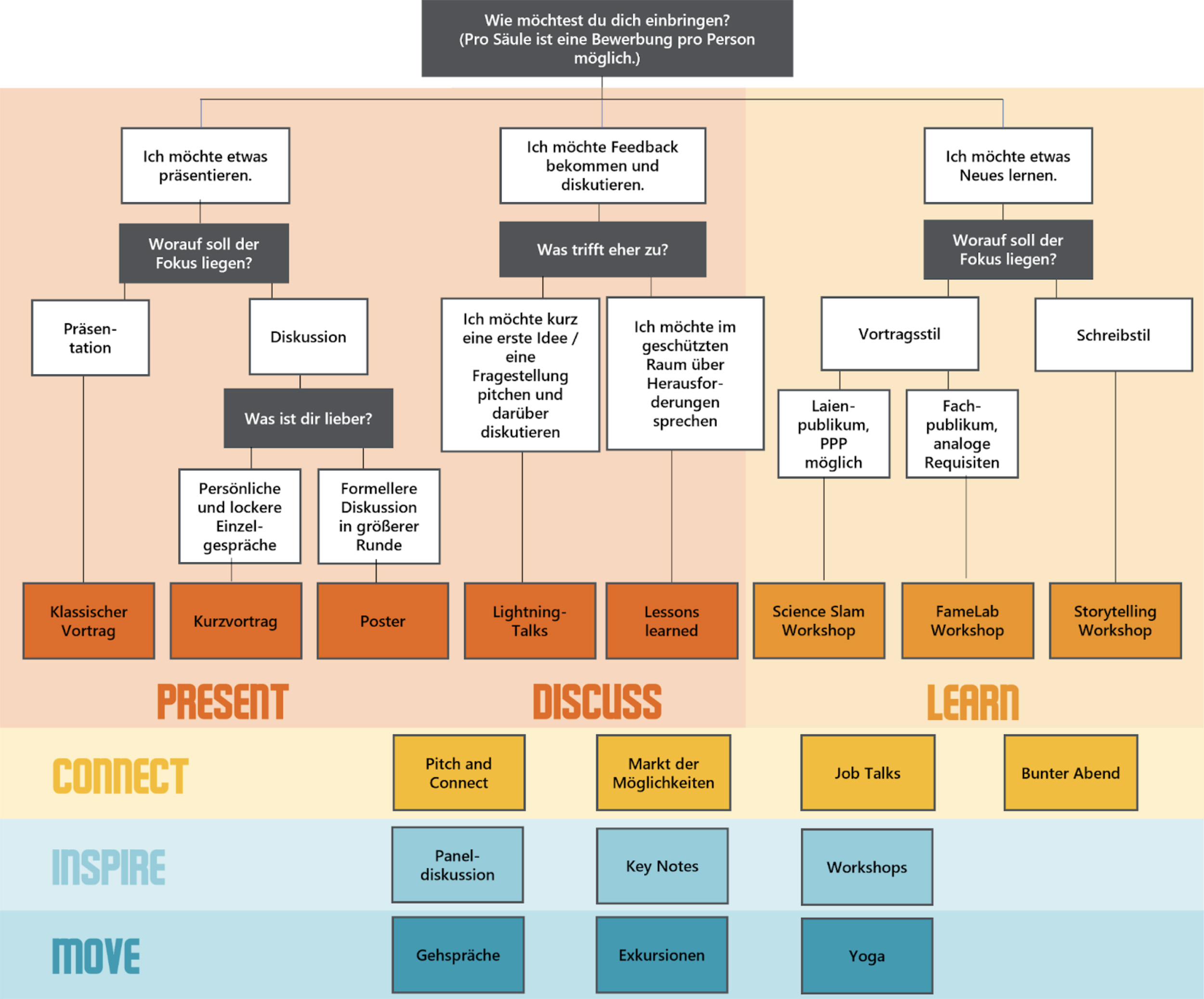
This Call for Contributions invites submissions across all topics. There are no pre-defined sessions; instead, contributions will be grouped into thematic sessions after submission. This approach aims to strengthen the transdisciplinary and network-oriented character of the GCC. You can choose from several contribution formats. Our decision tree helps you find the best fit for your idea. You can submit one contribution per track.
We would love to hear from you – please get in touch via email and share your ideas and suggestions.
Contributions can be submitted until 28 February 2026.
All submissions undergo a peer review by the members of the Scientific Advisory Board. The review evaluates the scientific quality, relevance, and clarity of the proposal. Contributions are organized thematically, and every effort is made to include as many submissions as possible.
Notification of acceptance will be provided by 30 April 2026.
We look forward to your submissions and to welcoming you to the GCC!
In three minutes, you present an idea, your project, or an open question – clearly and concisely, without lengthy slides. After that, it goes straight into matching: Who fits as a collaborator, co-author, or data partner?
Further information will follow …
In the Science Slam workshop, you will learn how to present research in an entertaining way to a non-specialist audience. In the FameLab workshop, you practice explaining complex content clearly within three minutes. PowerPoint slides are not permitted, but simple props may be used. At the Science Slam on 1 October, you can immediately apply and showcase what you have learned!
Further information will follow …
General Admission:
Regular: 289 EUR
Member Pass (VGDH, DVAG, HGD, VDSG, GeoDACH):
Regular: 239 EUR
Student General Admission:
Regular: 179 EUR
Student Member Pass (VGDH, DVAG, HGD, VDSG, GeoDACH):
Regular: 99 EUR
General Admission:
Early Bird: 289 EUR
Member Pass (VGDH, DVAG, HGD, VDSG, GeoDACH):
Early Bird: 239 EUR
Student General Admission:
Early Bird: 179 EUR
Student Member Pass (VGDH, DVAG, HGD, VDSG, GeoDACH):
Early Bird: 99 EUR
Die Anmeldung ist abgeschlossen.
Members of geographical associations receive attractive discounts.
21.11.2025 – 28.02.2026
Submission Period for Conference Contributions
16.03. – 30.04.2026
Selection of Contributions and (Preliminary) Schedule
30.04.2026
Notification of Acceptance
30 September – 2 October 2026
Geography Connect Convention

Mit Luisa Neubauer begrüßt die Geography Connect Convention 2026 eine der profiliertesten Stimmen der deutschen Klima- und Nachhaltigkeitsdebatte. Als Klimaktivistin, Autorin und Geographin steht sie für eine öffentliche Auseinandersetzung mit den großen Transformationsfragen unserer Zeit – wissenschaftlich informiert, gesellschaftlich engagiert und politisch wirksam.
Ihre Keynote setzt einen besonderen Akzent im Programm der GCC 2026. Sie greift zentrale Themen auf, die auch die Geographie in Forschung, Lehre und Anwendungspraxis intensiv beschäftigen: Klimakrise, gesellschaftlicher Wandel, Verantwortung, Zukunftsgestaltung und die Frage, wie Wissen in konkrete Veränderungsprozesse übersetzt werden kann. Gerade die Geographie kann hierzu wichtige Beiträge leisten, weil sie Mensch-Umwelt-Beziehungen, räumliche Ungleichheiten, Transformationsprozesse und Zukunftskonflikte in ihrem Zusammenhang betrachtet.
Die GCC 2026 versteht sich als neues Forum für Austausch, Vernetzung und gemeinsame Reflexion innerhalb der Geographie und darüber hinaus. Sie bringt Studierende, Nachwuchswissenschaftlerinnen und Nachwuchswissenschaftler, etablierte Forschende, Lehrkräfte sowie Akteurinnen und Akteure aus Praxis, Verwaltung, Wirtschaft und Zivilgesellschaft miteinander ins Gespräch. Die Keynote von Luisa Neubauer unterstreicht diesen Anspruch: Geographisches Wissen soll nicht nur analysieren und erklären, sondern auch Orientierung geben und gesellschaftliche Debatten bereichern.
Mit ihrem Engagement, ihrer öffentlichen Präsenz und ihrem fachlichen Hintergrund als Geographin steht Luisa Neubauer in besonderer Weise für die Verbindung von Wissenschaft, Öffentlichkeit und Verantwortung. Ihre Keynote wird damit einen starken Impuls für die Geography Connect Convention 2026 setzen und den Auftakt zu intensiven Diskussionen über Risiken, Transformationen und Zukünfte bilden.
Die Anmeldung zur GCC 2026 ist bereits möglich. Mitglieder geographischer Fachverbände profitieren von vergünstigten Teilnahmegebühren.
Copyright Foto: Lena Faye

Ich gehe zur GCC, um während meiner Promotion offene Fragen und Zwischenergebnisse aus dem Feld in die Diskussion zu bringen. Die Vielfalt der Formate ermöglicht es mir, Ideen gemeinsam mit erfahreneren Wissenschaftler*innen und meiner Peer-Group zu reflektieren und dabei meine fachliche Community zu entdecken.
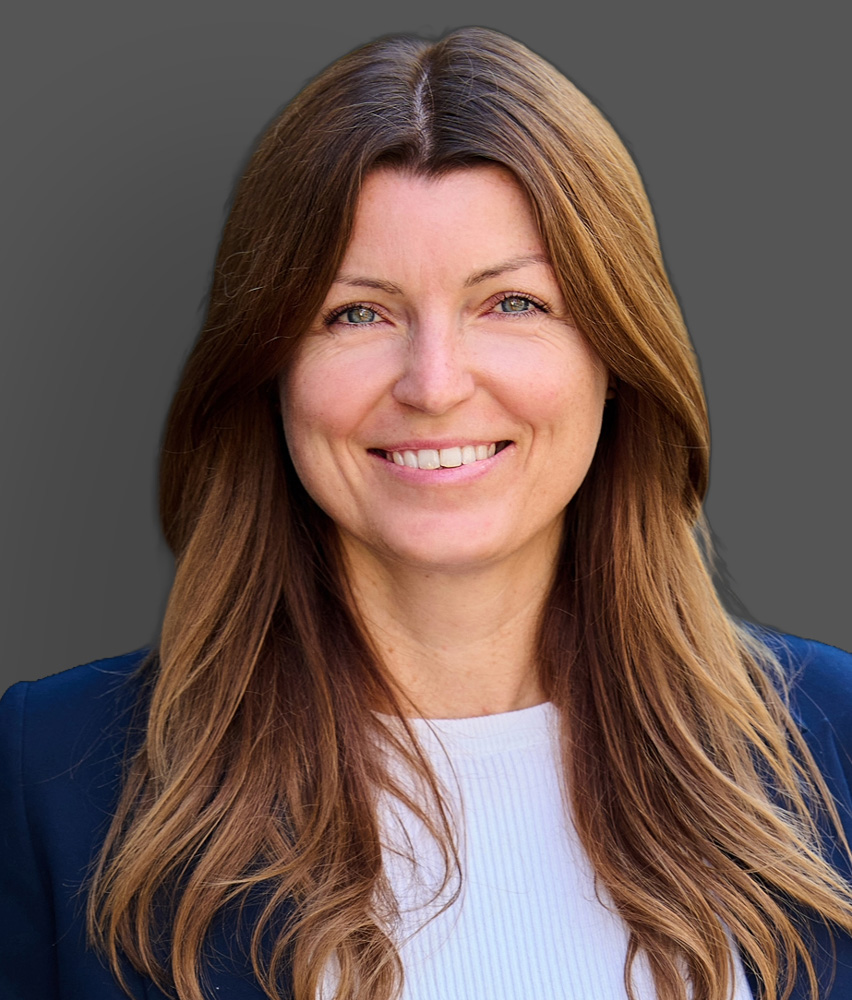
“Ich freue mich sehr auf die GCC in Osnabrück – besonders auf die neuen Formate. Die Kurzformate bieten eine tolle Gelegenheit, frische Ideen kompakt vorzustellen, miteinander zu diskutieren und neue Impulse für Forschung und Praxis mitzunehmen.” Prof. Dr. Sina Hardaker, Hochschule München
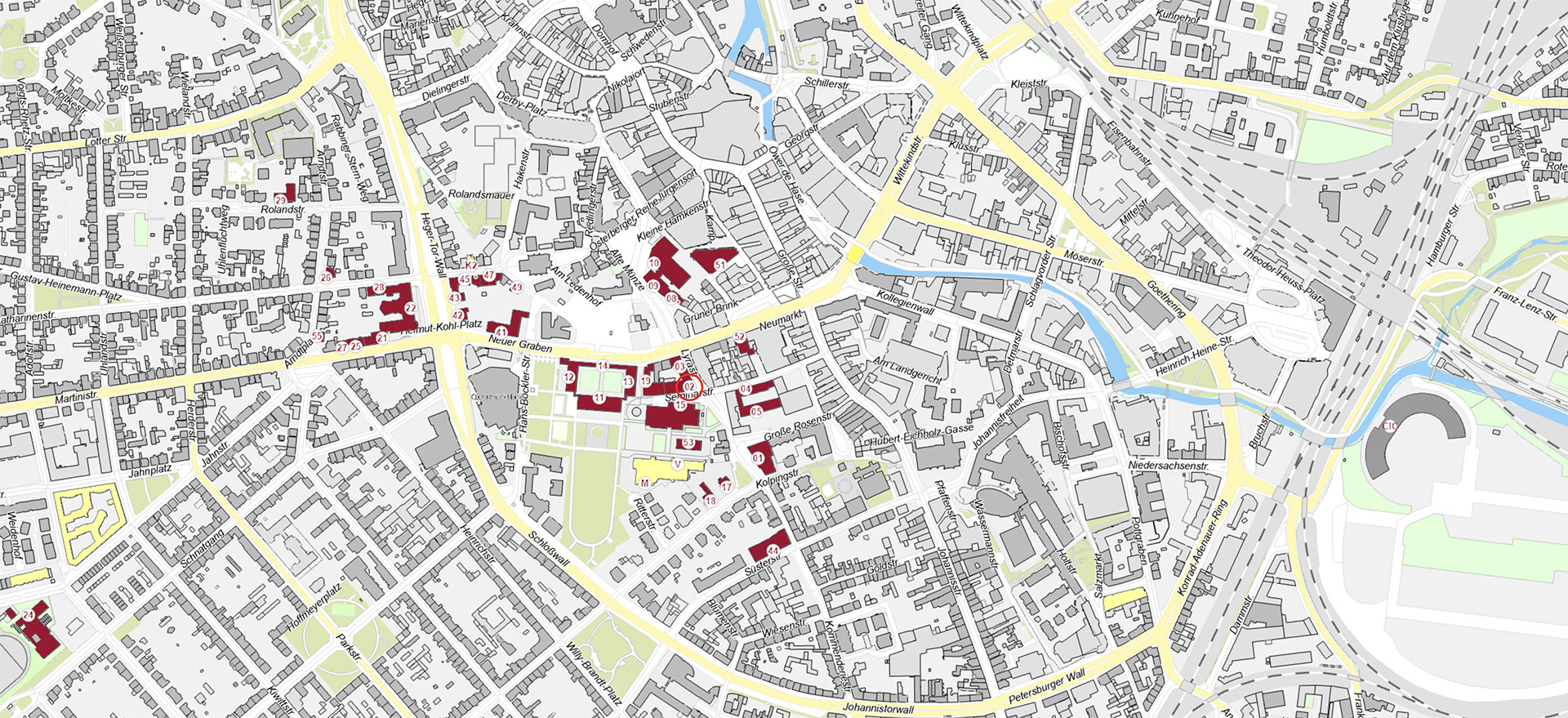
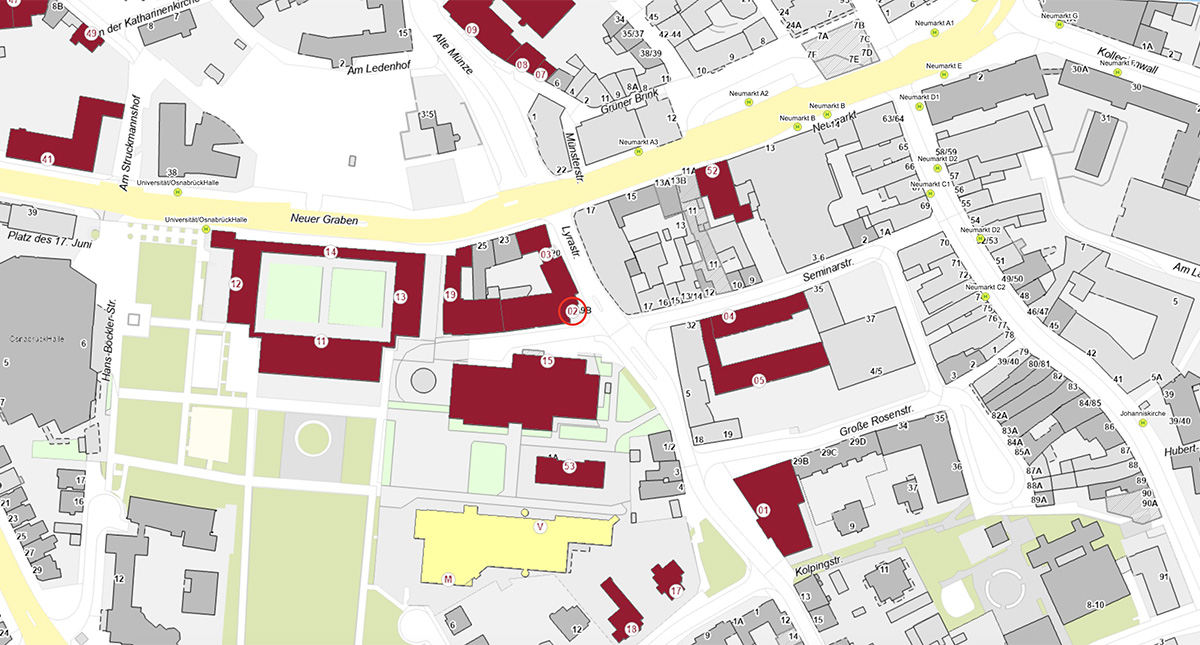
The University of Osnabrück's city centre campus can be reached on foot in approx. 15 minutes (1.2 km) or by bus lines M2, 14, 15, 16 and 17 (to the Neumarkt stop).
Osnabrück liegt im Nordwesten Deutschlands und ist leicht zu erreichen. Wir empfehlen die Anreise mit klimafreundlichen Verkehrsmitteln! Hotelzimmer können über folgenden Link zu Sonderkonditionen gebucht werden.
Wir wünschen eine angenehme Reise nach Osnabrück!
The Scientific Advisory Board develops the new conference format conceptually and in terms of content. It determines the selection of topics, program design, and panel composition to ensure scientific quality and relevance.
Carla Bube Carla Bube is currently completing her master's degree in “Geography of Global Change” at the University of Freiburg. Her master's thesis deals with touristic place constructions on the Great Barrier Reef, while her bachelor's degree focused on topics in development geography. In addition to her studies, she works at the Africa Centre for Transregional Research in Freiburg. She was active at GeoDACH e.V. for many years, led the organization of the Young Geography Congress 2025 in Leipzig, and has been a member of the board of the German Association for Applied Geography since September 2025.
Prof. Dr. Sina Hardaker has been Professor of Anthropogeography at Munich University of Applied Sciences since September 2025. After studying at the Niederrhein University of Applied Sciences and Liverpool John Moores University, she obtained her doctorate in 2015 from the University of Würzburg on the internationalisation of the Chinese food retail sector. Her current research focuses on the economic, social and spatial implications of digitalisation, in particular the impact of digital platforms on urban transformation processes. She is currently leading a DFG-funded project on the platformisation of retail and is involved in international collaborations on topics such as digital free trade zones.
Dr. Felix Henselowsky studied Geography, earning a Bachelor of Science degree in 2012 and completing a master's degree in Quaternary Research and Geoarchaeology in 2014, both at the University of Cologne. He then began his doctoral thesis as part of the DFG Collaborative Research Center 806 “Our Way to Europe,” which was successfully completed in 2019 with the title “Early Late Pleistocene environments in Northeast Africa and their relevance for Anatomically Modern Human dispersal.” From 2014 to 2017, he was employed at the Department of Geography at the University of Cologne and moved to the Department of Geography at the University of Heidelberg (working group “Geomorphology and Soil Geography”) in 2018. Since 2021, he has been a permanent research assistant at the Department of Geography at the University of Mainz. The thematic focus of his research lies in the field of geoarchaeology, particularly in arid regions of the world, e.g., in Egypt and Namibia, and anthropogeomorphology, e.g., using the example of relief changes caused by lignite mining in the Rhineland. Since the beginning of 2024, he has been an assessor on the board of the VGDH (Association for Geography at German-speaking Universities and Research Institutions).
Verena Pohl has been studying for a Bachelor’s degree in Geography with a minor in Political Science at Julius-Maximilians University Würzburg since 2022. Her focus is on Physical Geography, in which she is currently writing her bachelor’s thesis on Germany’s climatic water balance. In addition to her studies, she works as a student assistant at Recurrent Energy Germany GmbH, where she is involved in project development for solar parks and battery storage systems. Through her years of engagement with the Geography Student Initiative at her university, she became involved with GeoDACH e.V. (the association representing German-speaking geography students from Germany, Austria, and Switzerland), the organizer of national student conferences. Since January 2025, she has been active as a board member of the association and has been elected chairperson for 2026. She was also part of the organizing team for the Young Geography Congress 2025 in Leipzig, organized by GeoDACH e.V.
Dr. Sebastian Rauch is currently the Head of the MOVE (Mobility and Traffic Safety) research group at the Institute for Empirical Sociology (IfeS) at the University of Erlangen–Nuremberg. He studied Geography at the Friedrich-Schiller-University Jena and earned his PhD in Social Geography at the Julius-Maximilian-University of Würzburg in 2020 with a dissertation on migration and social networks. He subsequently spent three years as a postdoctoral researcher at the University of Würzburg. During this time, his research focused on mobility studies, medical geography and methods in human geography. Dr. Rauch also worked in the field of urban development and transportation planning in Munich, where he was particularly involved in innovation projects related to new mobility concepts. Since October 2024, he is leading the MOVE research group at IfeS, which focuses on mobility surveys, mobility management, traffic safety, and accessibility and service provision analyses.
Dr. Niklas Völkening studied Geography, Economics, and Spatial Planning at the University of Augsburg. Since 2016, he has been a research associate at the Chair of Human Geography and Transformation Research at the same university. In 2022, he received his doctorate with the dissertation “Identity, Commodification and Revolution: Tourism and the Transformation of Society, Politics and Space in Cuba.” His research focuses on social-ecological transformation processes, human–environment relationships, and geographical tourism research. He primarily uses qualitative methods and focuses regionally on Cuba, Estonia, and southern Germany. Since 2023, he has served as Managing Editor of STANDORT – Journal of Applied Geography and is actively involved in knowledge transfer between research and practice. Additionally, he is the spokesperson for the regional forum “Swabia” within the German Association for Applied Geography (DVAG). In teaching, he supervises numerous theses and develops formats at the intersection of empirical social research and regional transformation and tourism studies.
Prof. Dr. Martin Franz is a Professor of Human Geography with a focus on Economic Geography at the Institute of Geography at the University of Osnabrück. His research examines the effects of major social and economic changes—specifically economic structural change, digitalization, globalization processes, and the sustainability transition—and the resulting responses of affected individuals, companies, and institutions. He is particularly interested in how different actor groups attempt to influence societal and economic changes and adapt themselves—or their activities—to these processes. After studying Geography, Sociology, and Cartography in Bochum, Martin Franz worked until 2006 at the Center for Interdisciplinary Ruhr Area Research (now Regional Research) in Bochum. He then moved to the Department of Geography at Philipps University Marburg, where he completed his doctorate in 2008 on the topic “Brownfield Development in Europe and the Institutional Dimension of Sustainability, Illustrated by the Case of Upper Silesia.” In 2011, he completed his habilitation on “Changing Power Structures in Agro-Food Networks – Case Studies from India.” In the winter semester of 2013/14, Martin Franz’s work as a temporary Academic Councilor in Marburg was interrupted by a visiting professorship in Economic Geography at the University of Bayreuth. Since 2014, he has held the professorship of Human Geography with a focus on Economic Geography at the University of Osnabrück. He is a member of the Institute for Environmental Systems Research and the head of the Institute of Geography.
Prof. Dr. Britta Höllermann leads the Geographical Human–Environment Research group at the University of Osnabrück. As a geographer with extensive research experience in Sub-Saharan Africa and Germany, she specializes in human–environment interactions, particularly regarding socio-hydrological dynamics and risk management in water and agricultural systems. Her research emphasizes participatory approaches that examine how stakeholders perceive and manage uncertainties related to hydroclimatic risks. She is currently leading a project within the ECORISK Graduate School, focusing on systemic risks and regime shifts.
Members of a geographical professional association receive reduced ticket prices. Membership therefore offers additional benefits.





08:00
09:00
09:30
10:00
10:30
11:00
11:30
12:00
Excursions & Walking Talks
12:30
Registration
13:00
Welcome
13:30
14:00
14:30
Keynote
15:00
B R E A K
15:30
16:00
16:30
Workshops
17:00
B R E A K
17:30
18:00
18:30
Pitch & Connect
19:00
19:30
From 8:00 PM
Pub Night
08:00
09:00
09:30
10:00
Sessions
10:30
B R E A K
Workshops
12:30
13:00
B R E A K
13:30
14:00
14:30
Excursions & Walking Talks
15:00
B R E A K
15:30
16:00
16:30
17:00
B R E A K
17:30
18:00
18:30
19:00
19:30
From 8:00 PM
Party
08:00
09:00
09:30
10:00
Panel-Discussion
10:30
B R E A K
B R E A K
14:30
15:00
15:30
16:00
Excursions & Walking Talks